

Dental Veneers: Benefits, Types, Cost, Process & Comprehensive Guide
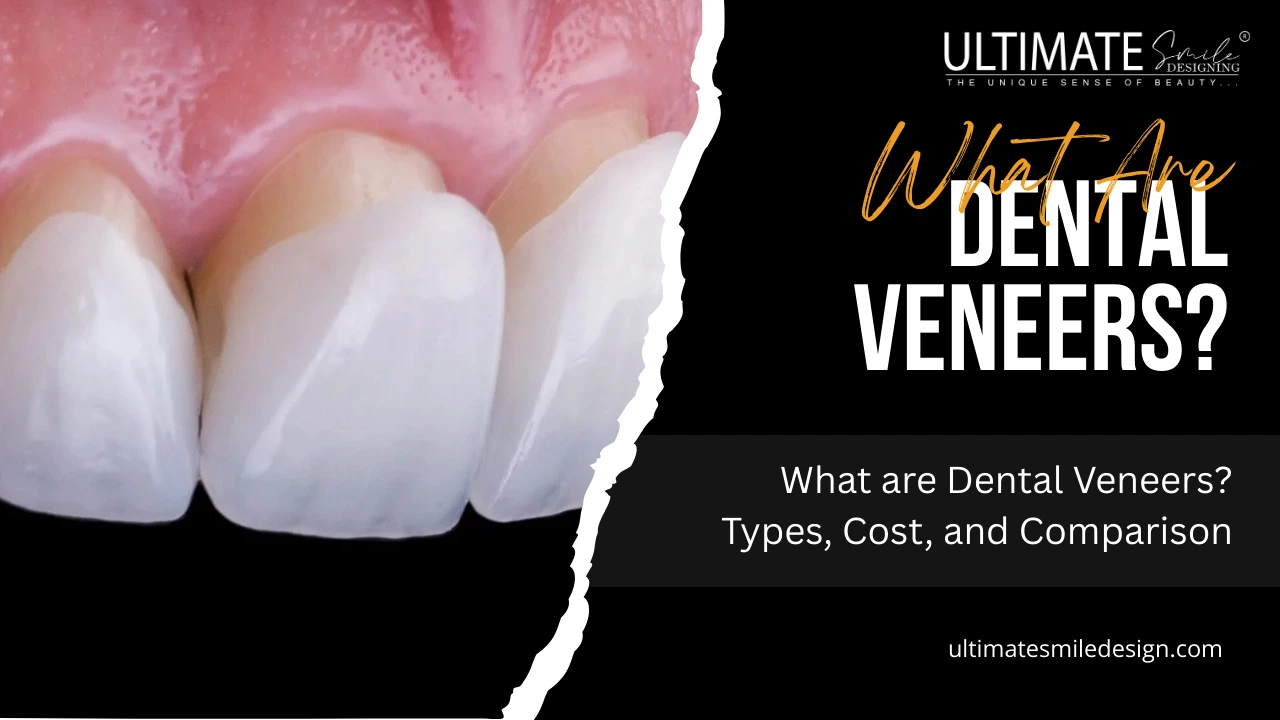
Dental veneers are thin, custom-made restorations bonded to the front surface of teeth to improve the appearance of the smile. They may be used for concerns such as persistent discolouration, small chips, uneven tooth shape and selected small gaps.
The main veneer options include E.max, porcelain and composite resin. Emax veneers generally offer good stain resistance and a natural appearance, while composite can usually be placed more quickly and is easier to repair. E.max is widely used for anterior teeth because it combines aesthetics, strength and adhesive bonding.
Premium smile design treatments such as Ultimate Smile Design (USD) focus not only on the veneer material but also on how the smile is planned in relation to the teeth, gums, lips and facial features.
Veneers are not suitable for every tooth or every cosmetic concern. The right choice depends on the condition of the teeth and gums, bite, available enamel, desired changes, material selection and how much natural tooth structure needs to be preserved.
What are dental veneers?
A dental veneer is a thin layer of dental material placed over the visible front surface of a tooth. Depending on the material, it may be fabricated in a dental laboratory or built directly on the tooth by the dentist.
Veneers may be considered when the main concern involves:
- Colour of the teeth
- Shape and proportions
- Length of the teeth
- Appearance of small chips or worn edges
- Appearance of selected small gaps
- Overall consistency of the front teeth
They do not move teeth into a new position in the way orthodontic treatment does, and they do not replace the structural function of a full-coverage crown.
This distinction is important. A tooth with extensive decay, major structural damage or another underlying dental problem may need restorative treatment before or instead of a veneer. Active gum disease and untreated decay should also be addressed before elective cosmetic treatment.
Who can benefit from veneers?
Veneers may be considered when the main concern is cosmetic and the teeth are sufficiently healthy to support the restoration.
Common situations include:
- Discolouration that is not adequately improved by whitening
- Small chips or irregular edges
- Uneven tooth shapes
- Teeth that appear too short or disproportionate
- Selected small gaps
- Mild cosmetic irregularities
- A desire to change the colour and shape of several visible teeth
However, a veneer should not simply be placed over every cosmetic problem.
For example, significant crowding may be better addressed with orthodontic treatment. A heavily damaged tooth may require a crown or another restoration. If the gums are unhealthy, treating the gum condition takes priority.
Patients who regularly grind or clench their teeth may also have a higher risk of veneer complications and need their bite and protective measures evaluated before treatment. Long-term clinical research has found a substantially higher failure risk in patients with parafunctional habits such as bruxism.
The important question is, therefore, not simply, “Which veneer should I get?” It is, “Is a veneer the right treatment for my teeth and my actual goal?”
Types of dental veneers
Veneers are mainly differentiated by their material and the amount of tooth preparation required.
E.max veneers
E.max veneers deserve particular attention because they are one of the most widely discussed premium ceramic options for aesthetic restorations.
E.max is a lithium-disilicate glass-ceramic. It is one type of dental ceramic rather than a general name for all porcelain veneers. Its optical properties can reproduce translucency and light reflection effectively on visible front teeth.
E.max veneers are therefore often considered when both appearance and mechanical performance matter.
Key advantages of emax veneers include:
- Natural-looking translucency
- Good colour stability
- High strength relative to many traditional glass-ceramic options
- Good compatibility with adhesive bonding techniques
- Ability to create relatively thin restorations when the clinical situation allows
- Strong aesthetic performance for anterior teeth
Clinical evidence on lithium-disilicate restorations supports their use as a durable ceramic material, while studies demonstrate that long-term success depends heavily on case selection, preparation, bonding, occlusion and clinical execution.
E.max can be an excellent option for many anterior cases , but there is no single material that is best for everyone. The result depends on the material, preparation, ceramic design, laboratory work, bonding and treatment planning.
Porcelain veneers
“Porcelain veneers” is a broad term for veneers made from dental ceramic. Different ceramic systems have different optical and mechanical properties, so they should not all be treated as the same material.
Porcelain veneers can provide a natural appearance and good stain resistance. They may be useful when tooth colour, shape or proportions need to be changed while keeping the restoration more conservative than a crown.
Find Ultimate Smile Designers
The amount of preparation varies from case to case. Some conventional veneers require enamel removal to create space and provide a suitable bonding surface. Because enamel may be removed, treatment can be irreversible.
Composite veneers
Composite veneers are made from tooth-coloured resin and are usually applied directly to the tooth by the dentist.
One practical advantage is speed. Depending on the case, composite treatment can often be completed in a single appointment without laboratory fabrication.
Composite is also relatively easy to repair if a small portion chips. The trade-off is that resin is generally more susceptible to staining, wear and surface changes than ceramic.
Composite may be suitable when the required change is relatively small, a lower-cost option is preferred, or preserving tooth structure is particularly important.
No-prep and minimal-prep veneers
No-prep, minimal-prep or ultra-thin veneers aim to reduce tooth preparation compared with conventional veneers. They may work in carefully selected cases where the existing tooth position, shape and colour allow the desired result without creating excessive thickness.
The term “no-prep” can be misleading. Some cases still require limited enamel preparation, and these veneers are not suitable for everyone.
If a tooth is already prominent, significantly dark or incorrectly positioned, adding a thin shell without adequate space may make the tooth look bulky or fail to achieve the intended colour.
E.max vs porcelain vs composite veneers
|
Feature |
E.max veneers |
Porcelain veneers |
Composite veneers |
|
Main material |
Lithium-disilicate glass-ceramic |
Porcelain ceramic |
Composite resin |
|
Aesthetics |
Excellent optical properties |
Can provide highly natural results |
Good, but the material behaves differently from ceramic |
|
Stain resistance |
High |
Generally high |
More susceptible to staining |
|
Fabrication |
Usually laboratory/CAD-CAM or pressed |
Usually laboratory-fabricated |
Usually chairside |
|
Treatment time |
Usually more than one visit |
Usually more than one visit |
Often fewer visits |
|
Cost |
Usually premium |
Varies by ceramic and laboratory |
Usually lower |
|
Best suited to |
High-aesthetic anterior cases where ceramic performance is appropriate |
Aesthetic cases where the selected ceramic meets the clinical requirements |
Smaller cosmetic changes and selected budget-conscious cases |
The important point is that E.max should not be chosen simply because it is labelled “premium.” The dentist still needs to determine whether the material and veneer design suit the individual tooth.
How long do veneers last?
Veneer longevity should not be presented as a guaranteed number of years. Long-term studies show that Emax veneers can have high survival rates, but failures still occur.
One long-term clinical study reported an estimated survival rate of veneers is 93.5% at 10 years and 82.93% at 20 years. Fracture was the most common reason for failure in that study, while bruxism was associated with a substantially increased failure risk.
Another clinical survey involving IPS E.max Press veneers found that failures occurred and highlighted the importance of clinical skill and treatment execution.
Therefore, statements such as “every E.max veneer lasts 15–20 years” or “veneers last for life” are too absolute.
Longevity depends on:
- Material and restoration design
- Amount and quality of remaining enamel
- Bonding technique
- Bite and occlusal forces
- Bruxism or clenching
- Oral hygiene
- Tooth condition
- Laboratory quality
- Clinical technique
- Regular maintenance
A well-planned veneer can remain functional for many years, but replacement may eventually be required.
What are the disadvantages of veneers?
Veneers are not maintenance-free, and they are not risk-free. Potential disadvantages include:
- Loss of some natural enamel with conventional preparation
- Temporary or persistent tooth sensitivity
- Chipping or fracture
- Debonding
- Changes at the margins
- Decay affecting the underlying tooth
- Need for future repair or replacement
- Cost of treatment
- Possible mismatch between the expected and achievable aesthetic result
Veneers also do not make the underlying tooth immune to decay. The natural tooth and surrounding gum tissue still require normal oral hygiene and professional dental care.
Veneers vs Crowns vs No-Prep Veneers: What Is the Difference?
Veneers and crowns serve different purposes. Refer to this comparison table to know the differences between veneers and crowns .
|
Feature |
Veneers |
Minimal/No-Prep Veneers |
Crowns |
|
Coverage |
Mainly facial surface |
Mainly facial surface |
Entire clinical crown |
|
Main purpose |
Aesthetic modification |
Conservative aesthetic modification |
Structural restoration and protection |
|
Tooth preparation |
Case-dependent |
Minimal or none in suitable cases |
Usually substantially greater |
|
Suitable for |
Selected healthy teeth with aesthetic concerns |
Cases with favourable tooth position and colour |
Severely weakened, damaged, or heavily restored teeth |
|
Tooth conservation |
More conservative than a crown |
Potentially most conservative |
Less conservative |
|
Reversibility |
Usually not reversible when enamel is removed |
May be reversible in selected cases |
Not reversible |
A veneer is generally preferable to a crown when a structurally sound tooth needs an aesthetic change and sufficient enamel remains for predictable bonding.
A crown becomes more appropriate when a tooth requires full coverage because of extensive structural loss, large restorations, significant fracture, or other restorative indications.
The decision should not be based only on appearance. Removing unnecessary tooth structure to place a crown for a purely cosmetic problem can be an avoidable treatment step.
The choice should therefore be based on the condition and function of the tooth rather than cosmetic preference alone.
What are Ultimate Smile Design veneers?
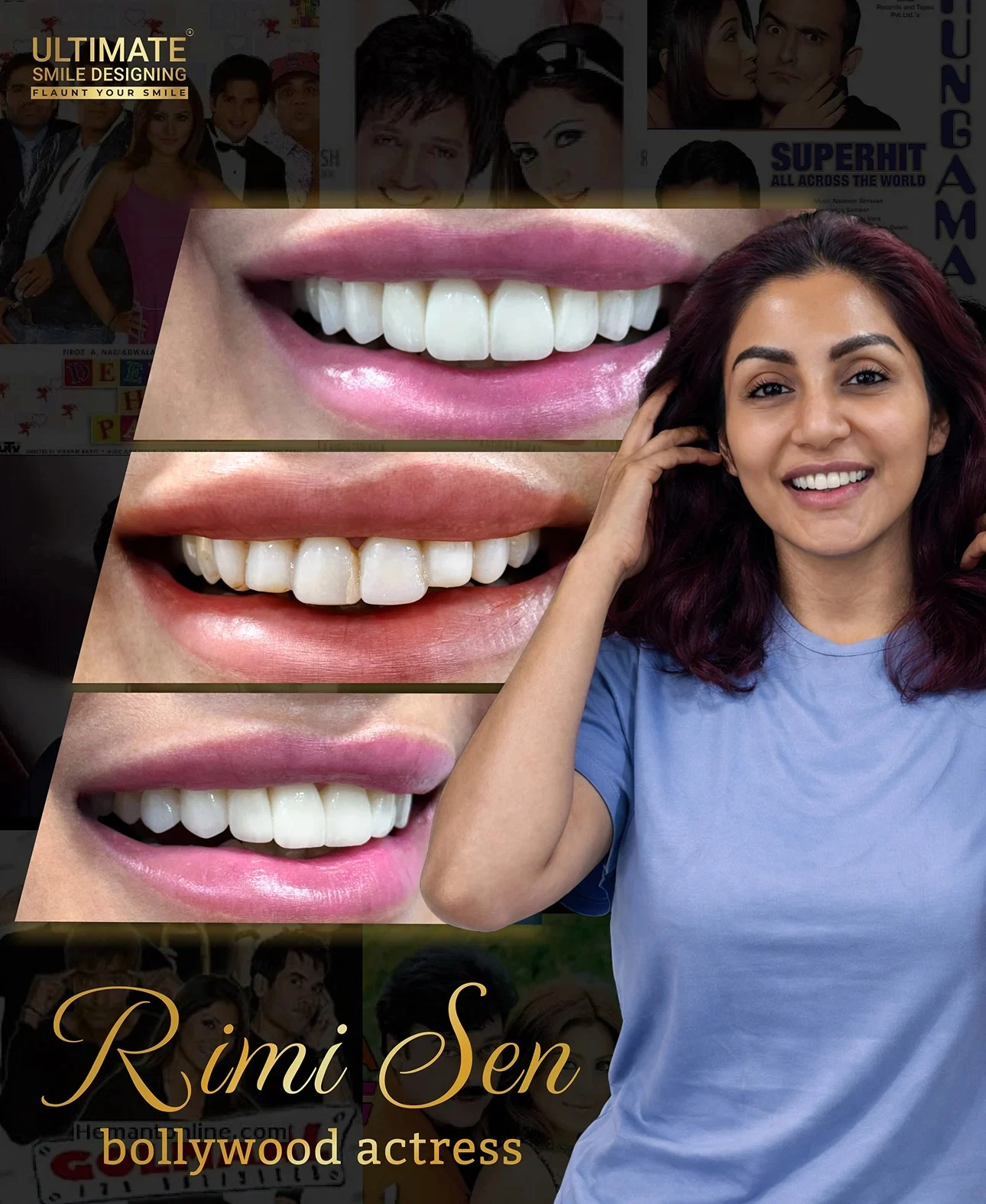
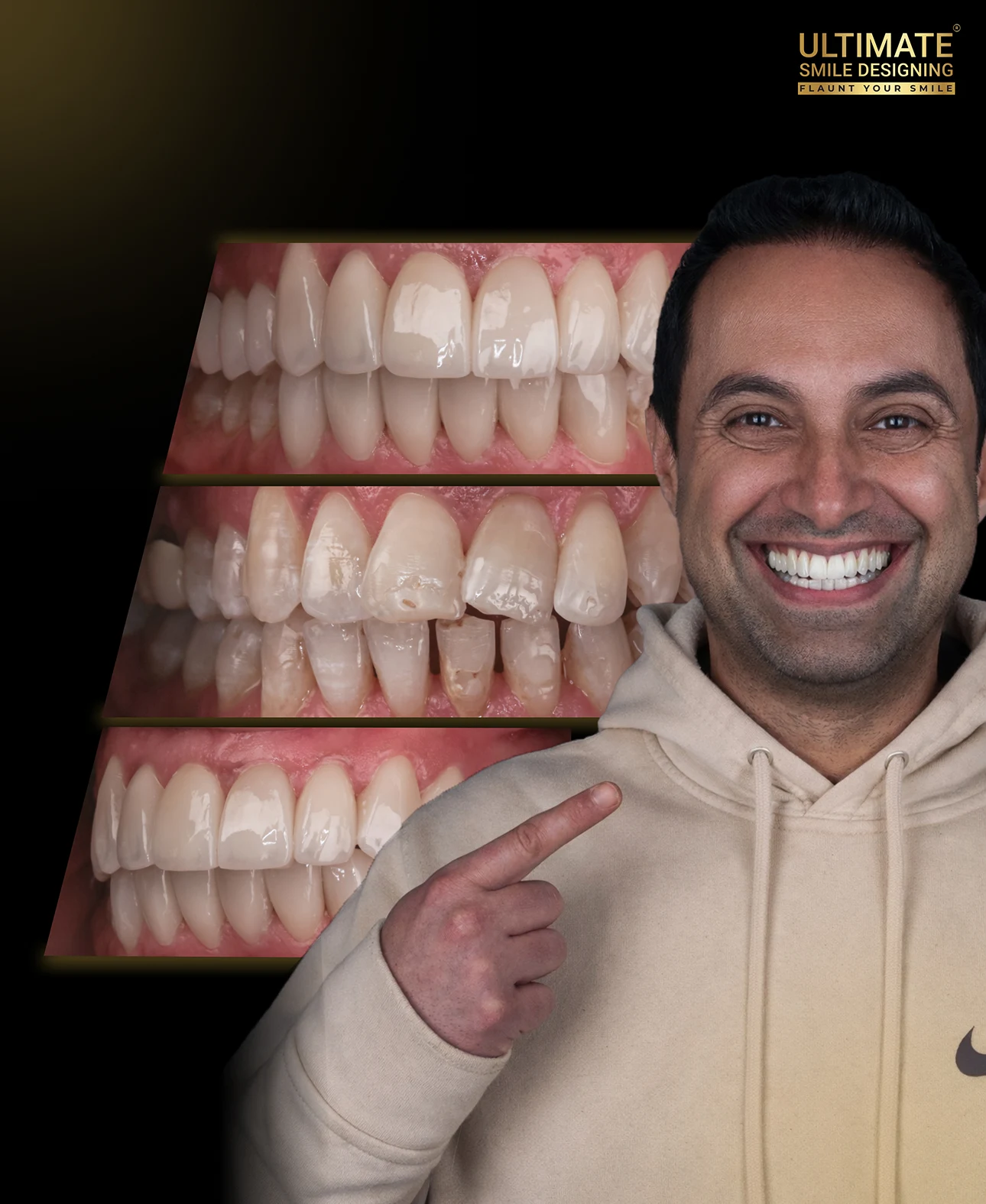
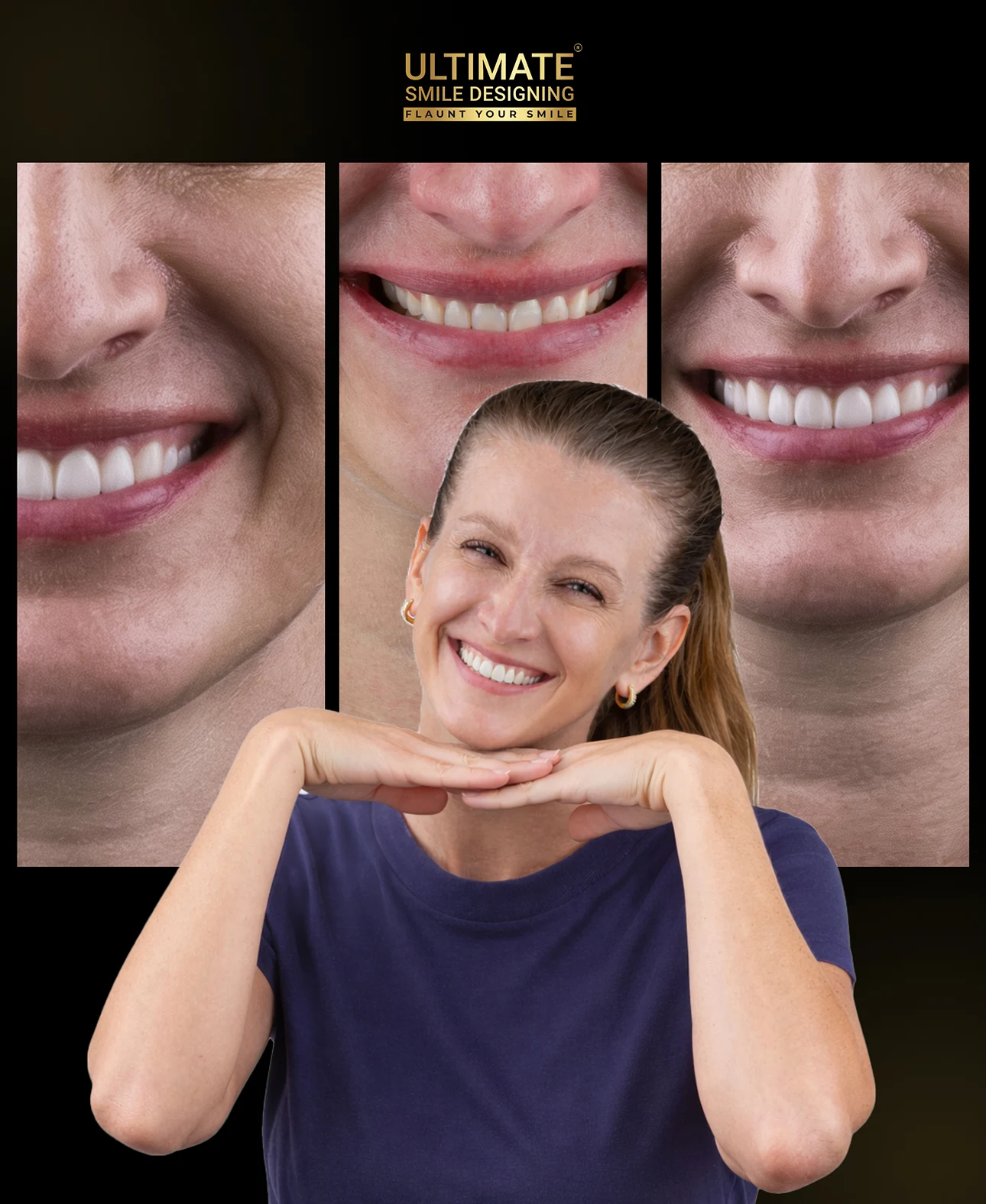
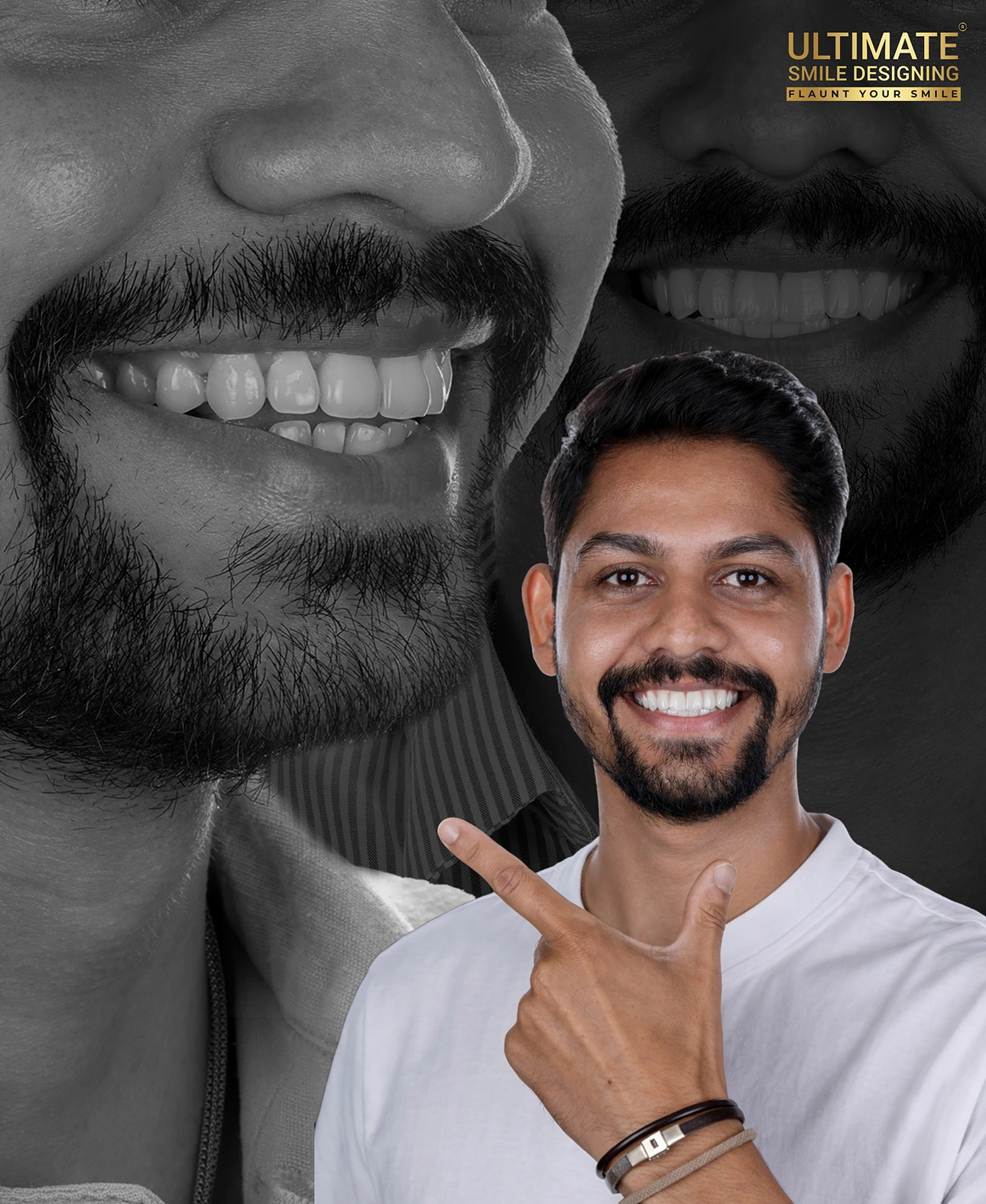
Ultimate Smile Design veneers are premium, aesthetic & handcrafted by the USD team for lifelong durability & a natural-looking smile.
Ultimate Smile Design (USD) is a premium, digitally planned smile-design approach developed around personalised smile analysis and treatment planning. This approach can be done by a certified USD smile designer only.
Our workflow includes smile analysis, digital design, mock-up and approval, laboratory fabrication and final delivery.
A USD case may use E.max or another suitable ceramic. The distinction is that USD refers to the planning, customisation and coordination of the smile design , not to a separate ceramic material.
The USD approach combines digital planning, laboratory craftsmanship and personalised smile design.
Why choose USD veneers over standard?
A conventional veneer may focus mainly on selecting a suitable restoration for individual teeth. Our USD approach places greater emphasis on designing the complete smile before treatment. This is the main reason to choose the Ultimate Smile Design approach .
This can be especially useful when several front teeth are being changed, because a small difference in one tooth can affect the appearance of the whole smile.
A digitally planned & handcrafted smile can help the dental team evaluate:
- Whether the planned tooth length suits the smile line
- Whether the proposed tooth width is proportionate
- How much tooth should actually be changed
- Whether the gum line needs consideration
- How the teeth relate visually to the lips and face
- Whether the proposed design looks natural before the final restorations are fabricated
The official USD workflow includes a mock-up and approval stage before final laboratory fabrication, which gives the patient an opportunity to review the proposed design before definitive treatment.
That planning advantage can be more important than simply choosing the most expensive ceramic.
E.max vs USD: are they the same?
No.
E.max describes a ceramic material used to make restorations.
USD describes a smile-design and treatment-planning approach.
They can be used together.
For example, a patient may undergo a USD smile-design process and receive E.max veneers fabricated according to the approved design.
This distinction is important because comparing “E.max vs USD” as though they are competing materials is technically incorrect.
A better comparison is:
E.max = what the veneer can be made from.
USD = how the smile can be digitally planned and coordinated before treatment.
The final quality still depends on the dentist, ceramic design, laboratory craftsmanship, preparation, bonding and the patient's clinical situation.
How much do dental veneers cost in India?
The starting price for veneers is 5,000 Rs, which can go up to 75,000 Rs or more for premium options like USD veneers.
There is no single fixed cost of dental veneers in India . It can vary substantially depending on:
- Veneer material
- Number of teeth
- Dentist's experience
- Laboratory involved
- Digital planning requirements
- Complexity of the smile design
- Need for preliminary dental treatment
- City and clinic
- Ceramic fabrication technique
Current Indian clinic and dental practice sources show broad variation in veneer pricing. For example, published 2026 prices commonly place composite veneers in the lower range, conventional ceramic veneers higher, and E.max and premium smile-design cases at the higher end.
The practical indicative costs of different veneers are:
|
Veneer option |
Indicative India price per tooth |
|
Composite veneers |
₹5,000–₹12,000+ |
|
Porcelain veneers |
₹10,000–₹25,000+ |
|
E.max veneers |
₹18,000–₹30,000+ |
|
Premium USD veneers |
₹25,000–₹75,000+ |
These are not guaranteed prices. The premium USD pricing is particularly dependent on the complexity and customisation of the case. Ultimate Smile Design currently lists premium USD veneers in the ₹25,000–₹75,000+ per-tooth range.
The quoted amount may or may not include consultation, digital smile design, scans, temporary restorations, laboratory charges, follow-up visits or treatment required before veneers.
Always ask for a complete treatment quotation rather than comparing only the advertised price per tooth.
What should you ask before getting veneers?
Before agreeing to treatment, ask the dentist:
- Do I actually need veneers for the problem I want to correct?
- What alternatives could achieve a similar result?
- How much natural enamel will be removed?
- Can the treatment be completed without preparation in my case?
- Which ceramic or composite material is being proposed, and why?
- Why is E.max appropriate—or inappropriate—for my teeth?
- Will my bite or grinding habits affect the veneers?
- How many teeth genuinely need treatment?
- Can I see a mock-up before permanent preparation?
- What is included in the quoted price?
- What happens if a veneer chips, fractures or debonds?
- How will the colour of my natural teeth affect the final result?
- What maintenance will I need?
For a full smile makeover, it is especially useful to understand the proposed design before irreversible tooth preparation begins.
Conclusion
The right veneers should complement your natural features, fit your dental condition and deliver the level of aesthetics you expect. E.max, porcelain and composite veneers each have their place, but the final result depends just as much on careful smile planning and personalised treatment as on the material itself.
The best outcome comes from choosing the right treatment for your teeth rather than choosing a veneer simply because it is labelled premium. A proper clinical assessment and a clear understanding of the material, preparation, expected result, maintenance and long-term considerations can help you make that decision with confidence.
Ultimately, the journey to a dream smile should begin with a thorough consultation and an understanding of all your options. By educating yourself on veneer types, maintenance, and alternatives, and by consulting with a skilled cosmetic dental team like Ultimate Smile Design, you can make an informed decision.
FAQs
Dental veneers are wafer-thin, custom-made shells bonded to the front surfaces of teeth. They cover cosmetic flaws like stains, chips, cracks, small gaps, and minor misalignments, improving the appearance of your smile without repairing deep structural damage. Veneers primarily serve aesthetic goals by masking imperfections and enhancing tooth uniformity.
The primary types of veneers include porcelain, composite resin, and ultra-thin no-prep options like Lumineers. Porcelain veneers are durable and lifelike, composite veneers are more budget-friendly and can be done in one visit, and no-prep veneers require minimal enamel removal, preserving more of the natural tooth structure.
Porcelain veneers are crafted in a lab and offer superior durability, stain resistance, and natural translucency, often lasting 10–15 years. Composite veneers are applied directly in the dentist’s chair, cost less, but tend to stain and wear faster, usually lasting about 5–7 years.
No-prep veneers, such as Lumineers, are ultra-thin porcelain shells that often require little to no enamel removal before bonding. They are recommended for mild cosmetic concerns where minimal alteration of the natural tooth is preferred, though they may be less effective at covering deep stains.
In India, veneer costs vary by material, clinic location, and dentist’s expertise. Porcelain veneers typically cost around ₹15,000–₹40,000 per tooth, composite veneers ₹8,000–₹20,000, and branded no-prep types can be similar to porcelain. Costs may also include lab work or preparatory treatments.

With over 20 years of unparalleled experience at the forefront of digital dental technology, I’m passionate about elevating dental care through state-of-the-art dental technologies. I remain dedicated to empowering dentists and practitioners by providing cutting-edge custom dental solutions that combine artistry, efficiency, and predictability, continuously exploring AI-driven design to shape the future of restorative dentistry.
Smile Design Before & After